Choose the object
Do you want something to carry, wear, display, or hold during a quiet pause? Let use determine form before symbolism determines the stone.
Form first · meaning secondVeil and Sage Field Notes · Ancient lore, clearly told
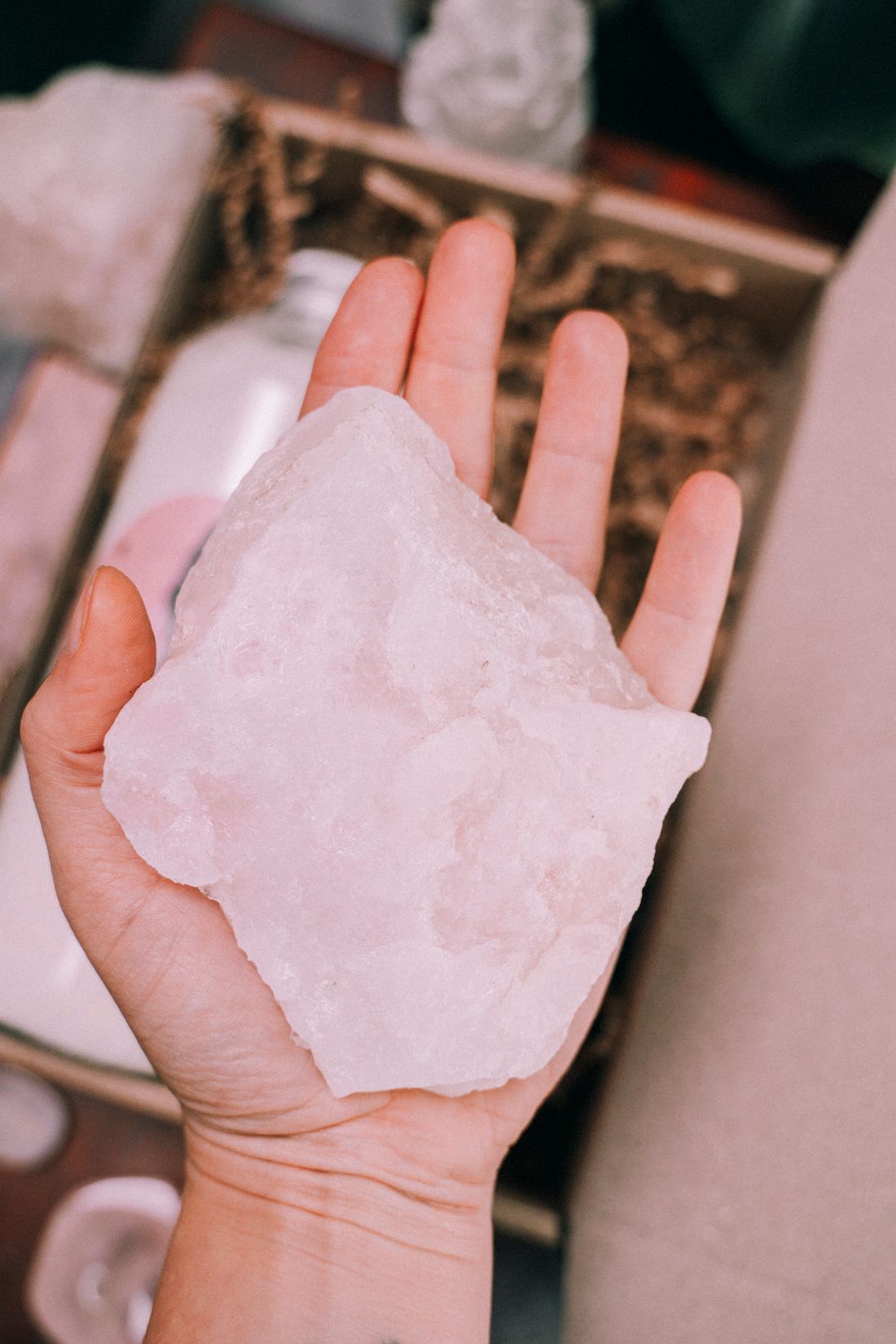
First stones · clear eyes · no pressure
A first-stone guide for choosing by beauty, story, durability, and the feeling you want to remember—not by fear or impossible promises.
Read the field noteThe short answer
Amethyst, clear quartz, rose quartz, and smoky quartz are accessible first choices, but the best beginner crystal is one you can identify, care for safely, and connect to a concrete intention. You do not need a large kit, a special sensation, or anyone else’s permission.
I · Before the lore
A beginner stone should invite curiosity without demanding a complicated ritual.
Start with what is observable: color, form, weight, texture, mineral identity, care requirements, and price. Then read the traditional associations as a layer of human story—not proof that the stone will control events.
A useful first crystal is easy to identify, safe for your home, comfortable to handle, and meaningful enough to notice. A small palm stone may suit daily reflection; a raw specimen may be better for a shelf; jewelry can make the reminder portable.
Do you want something to carry, wear, display, or hold during a quiet pause? Let use determine form before symbolism determines the stone.
Form first · meaning second“Pause before I answer” is more workable than “transform my life.” Let the crystal point toward an action you can recognize and repeat.
Specific · personal · possibleHardness is not the same as toughness. Some stones scratch, cleave, fade, dissolve, or react badly to water, salt, heat, and sudden temperature changes.
Identify before cleaningYou may choose a stone simply because it is beautiful. Personal taste is an honest beginning; no dramatic “calling” is required.
Curiosity is enoughII · Eight first stones
Use this table as a doorway, then read the full mineral and care entry in the Crystal Grimoire.
| Stone | Why beginners notice it | Association in modern lore | Care watch-out |
|---|---|---|---|
| Amethyst | Purple quartz; easy to recognize | Stillness, discernment, thoughtful boundaries | Avoid prolonged strong sun; brief gentle washing is usually suitable |
| Clear quartz | Transparent to milky; versatile focal object | Clarity, attention, purposeful beginnings | Keep spheres away from direct sun; they can focus light |
| Rose quartz | Soft pink quartz; widely available | Tenderness, self-trust, compassionate conversation | Prolonged bright sun may fade some pieces |
| Smoky quartz | Brown-to-gray quartz with an earthy presence | Grounding, focus, practical action | Avoid extreme heat and extended strong sunlight |
| Black obsidian | Volcanic glass with a dark, reflective surface | Boundaries, truth-seeing, release | Can chip into sharp edges; store away from harder stones |
| Labradorite | Gray feldspar with flashes at certain angles | Perspective, imagination, thresholds | Avoid soaking, salt, hard impacts, steam, and ultrasonic cleaning |
| Carnelian | Orange-to-red chalcedony; warm and portable | Courage, motion, creative confidence | Ask about dye or heat treatment; clean gently |
| Moonstone | Feldspar with a floating inner glow | Beginnings, intuition, gentle change | Cleavage makes it impact-sensitive; do not soak |
Color treatments, composite stones, glass, and trade names can make identification difficult. An honest seller should tell you when a piece is dyed, heated, reconstructed, synthetic, or otherwise treated when that information is known. Explore the Crystal Grimoire for deeper entries.
III · A three-step choice
The right first choice is not a test. It is the beginning of attention.
Pick three stones that hold your eye. Ignore meanings for a moment and record what you actually like: color, flash, shape, transparency, or weight.
Check the mineral name, dimensions, treatment, safe handling, and care. Read the lore only after you know what the object is.
Give the chosen stone one job as a reminder: beside a journal, at your desk, near the door, or in a pouch you will actually carry.
IV · Buy and keep wisely
Good crystal guidance protects the person, the stone, and the truth of the sale.
Questions from the cabinet
There is no universal best first crystal. Clear quartz, amethyst, rose quartz, and smoky quartz are common starting points because they are widely available, visually distinct, and relatively straightforward to care for. Choose the one you will actually notice, handle, and use as a reminder of your intention.
One is enough. Learn its name, mineral family, care limits, and traditional story before adding another. A small, understood collection is more useful than a large box of unidentified stones.
No. Some people describe subjective sensations; others simply enjoy the color, weight, geology, symbolism, or ritual. Not feeling anything unusual does not mean you chose incorrectly.
You can use zodiac and birthstone traditions as a creative prompt, but they are not rules. Color, care needs, budget, origin, and the story you personally connect with are equally valid ways to choose.
Look for clear size and weight, accurate photos, mineral identification, treatment disclosure, practical care guidance, a reachable business, and a plain return policy. Be cautious when every stone is described with guaranteed outcomes or no geological information.
No. Crystals can be meaningful objects in a personal reflection practice, but they do not diagnose, treat, or prevent illness and should not replace qualified medical or mental-health care.